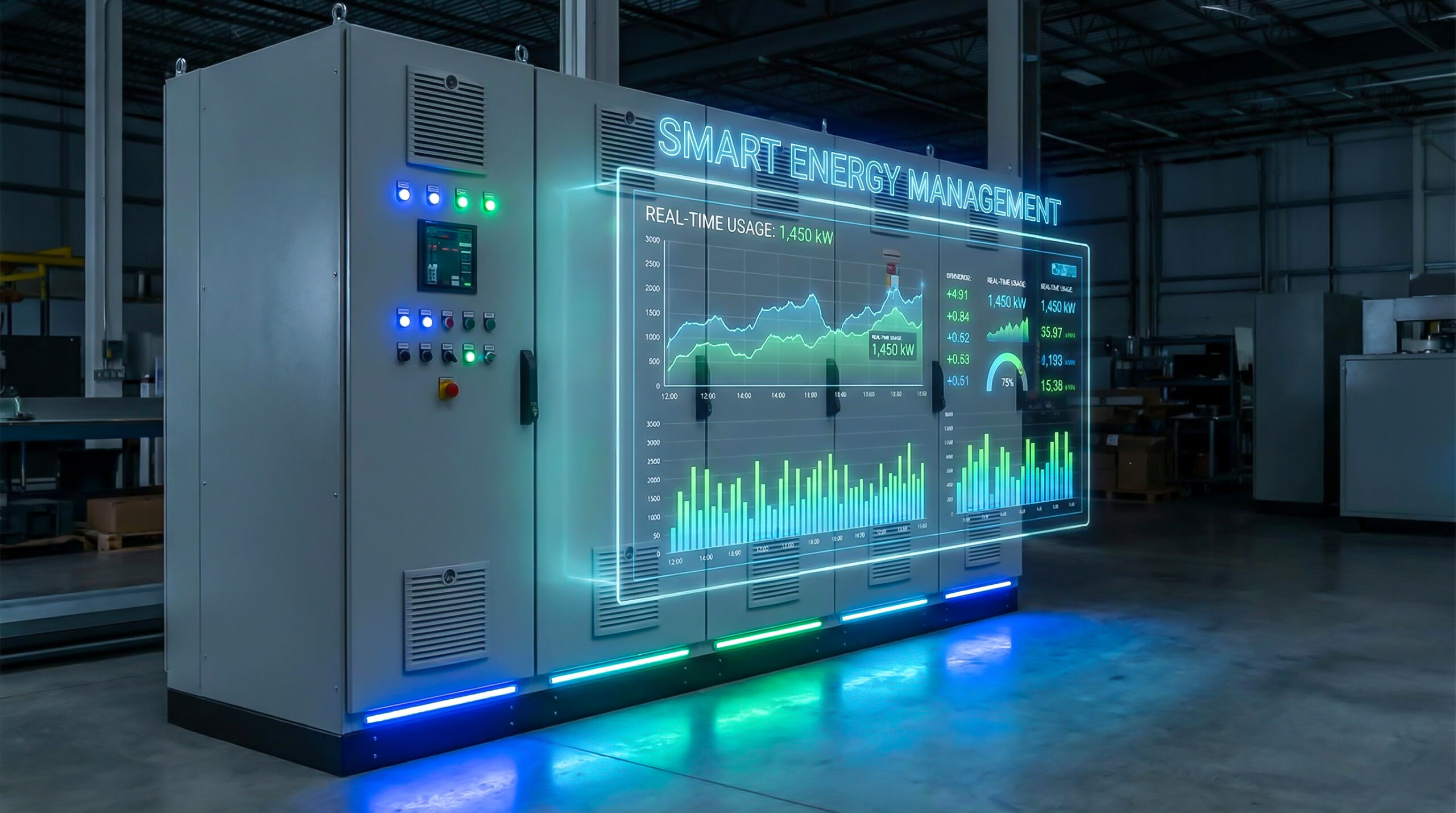
Businesses shift from managing energy costs to treating power as a strategic resource amid volatility
As Seen In:


Rising Energy Costs Demand a New Business Mindset
Electricity has quietly shifted from a manageable operating expense to a volatile business risk. Across industries, leaders are seeing utility costs rise faster than revenue, budgets strained by unpredictable rate increases, and energy decisions move from facilities teams into boardroom discussions.
The traditional response has been reactive: renegotiate utility contracts, implement efficiency measures, and absorb the remaining increases as unavoidable. In an era of persistent electricity volatility, that approach is no longer sufficient.
Forward looking organizations are making a strategic shift from managing energy costs to actively managing power as a business asset.
Energy Volatility Is Structural, Not Temporary
Rising electricity rates are not a passing anomaly. They reflect fundamental changes in how the grid is built, financed, and operated. Utilities are making large, long term investments to replace aging infrastructure, support electrification, accommodate data center growth, integrate intermittent renewable generation, and harden the grid against climate driven extreme weather.
Under traditional utility rate structures, these capital costs are passed directly to customers. The result is electricity pricing that is higher, more volatile, more regional, and more exposure driven. Organizations that continue to treat power as a fixed background cost will struggle as these structural pressures intensify.
To illustrate the trend, U.S. commercial electricity rates have risen roughly 17% since 2022, climbing from about 12 cents per kWh to more than 14 cents per kWh in early 2026, according the U.S. Energy Information Administration. This trajectory reinforces a critical reality: volatility is here to stay.
Why Cost Management Alone Falls Short
Traditional energy management focuses on efficiency and expense reduction. While necessary, efficiency has diminishing returns. Once the simplest savings are captured, organizations remain exposed to external forces they cannot control.
Cost focused strategies are reactive by nature. They respond after price increases occur, focus narrowly on consumption, ignore real time grid conditions and price signals, and often lack integration across systems and teams. In effect, they treat electricity as a bill to be paid, not a lever to be strategically pulled.
Reframing Power as a Strategic Business Resource
Managing power means understanding when, how, and why electricity is used, then aligning usage with operational and business priorities. Power becomes an active input that can be shifted, optimized, stored, or strategically deployed in response to cost, risk, and opportunity.
Organizations that manage power effectively can:
- Reduce exposure to peak pricing and demand charges
- Improve power resilience
- Align energy use with revenue generating activities
- Support sustainability and ESG objectives without sacrificing performance
Achieving these outcomes requires three core capabilities: visibility, integration, and resilience.
Visibility: You Can’t Control What You Can’t See
Monthly utility bills and lagging reports are inadequate in a dynamic pricing environment. Modern power management begins with real time visibility across facilities, systems, and loads.
This includes understanding which processes drive peak demand, how consumption changes throughout the day, and what flexibility exists to shift, delay, or automate usage. With this insight, leaders can make informed tradeoffs between comfort, productivity, cost, and risk in real time.
Integration: Turning Insight into Control
Visibility alone does not create value unless systems can act on it. True power management requires integration between buildings, energy systems, operations, and IT so that electricity usage aligns automatically with business priorities.
Integrated controls and automation enable organizations to reduce or shift load during peak price periods, coordinating HVAC, lighting, and equipment schedules with operations. Integration of building controls with power systems transform energy management from a manual, one off effort into a scalable, repeatable capability.
Resilience: Power Management as Risk Management
Rising energy costs are often accompanied by increased reliability risk. Grid congestion, extreme weather, and supply constraints make power availability just as critical as power price.
Organizations that actively manage power are better positioned to prioritize critical operations during outages, strategically leverage backup generation, storage, or microgrids, and recover more quickly from grid instability. In this context, power management becomes a core component of enterprise risk management and business continuity. The future belongs to businesses that stop managing costs and start managing power.
Stark Tech is a comprehensive power and energy management solutions provider, helping organizations gain visibility, control, and confidence across their electrical infrastructure. By combining advanced monitoring, intelligent controls, and integrated power systems, Stark Tech enables smarter decision making, improved reliability, and more resilient operations.
Learn more at https://starktech.com/critical-power/
Tom Murphy is a building technology and infrastructure professional with extensive experience supporting integrated power solutions at Stark Tech. Based in the Rochester, New York area, Tom works alongside clients and leads a team of mechanical and electrical engineers to help optimize building performance through smart, reliable systems. A graduate of Niagara University, he brings a collaborative approach and a strong understanding of modern facility needs across commercial environments.